
Is Thai food gluten free? More of it is than almost any other cuisine you’ll find at a typical American restaurant. Thai cooking is built on rice, rice noodles, coconut milk, fresh herbs, chili, lime, and fish sauce, and none of those contain gluten.
The catch is in a handful of sauces. Soy sauce, oyster sauce, and bottled seasoning sauces usually contain wheat, and they show up in stir-fries and noodle dishes. Once you know which dishes rely on them, ordering gluten-free Thai food gets easy.
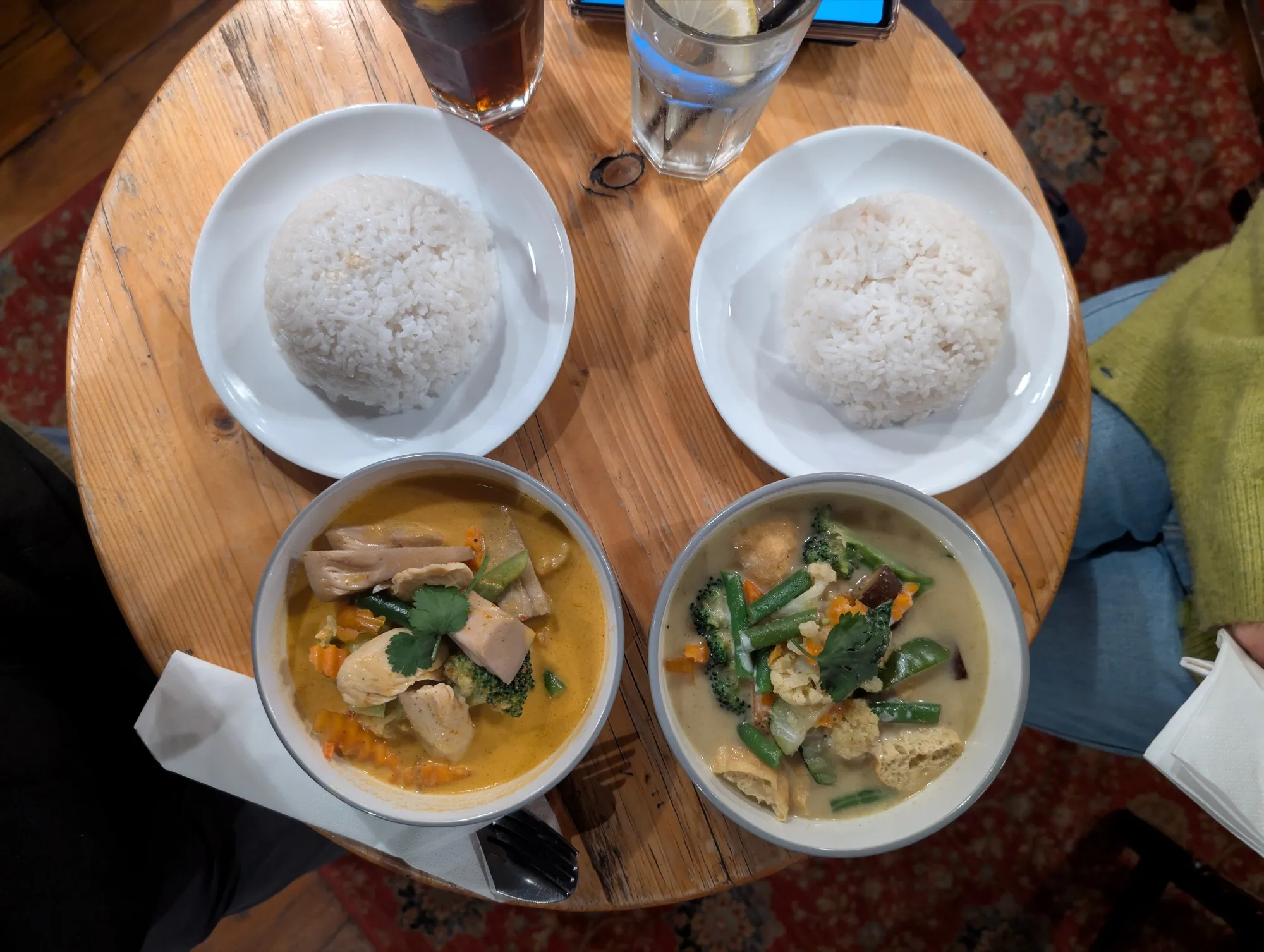
Thai curries with jasmine rice are one of the safest orders. Photo: Andy Li, public domain (CC0), via Wikimedia Commons
Looking for gluten-free Thai food near you? GF Scanner maps verified gluten-free restaurants, with a filter for 100% gluten-free kitchens.
Get GF Scanner →Table of contents
Open Table of contents
Quick answer: which Thai dishes are gluten free?
| Usually safe | Ask first | Avoid |
|---|---|---|
| Green, red, yellow, and panang curry | Pad thai (some kitchens add soy sauce) | Pad see ew (dark soy sauce) |
| Massaman curry | Thai fried rice (khao pad) | Drunken noodles (pad kee mao) |
| Tom yum and tom kha soup | Satay (marinade and peanut sauce) | Fried spring rolls (wheat wrappers) |
| Som tam (green papaya salad) | Thai basil stir-fry (pad krapow) | Anything battered and fried |
| Larb | Cashew chicken (oyster sauce) | Dishes with oyster sauce |
| Mango sticky rice |
The sauces that hide gluten
Soy sauce (see ew) is brewed with wheat. Thai cooks use both light soy sauce and a sweet dark soy sauce, especially in noodle dishes.
Oyster sauce is traditionally thickened with wheat starch and often contains soy sauce. It’s in many stir-fries, including cashew chicken and some versions of pad krapow.
Seasoning sauces like Maggi and other bottled stir-fry sauces usually contain wheat.
Fish sauce is generally gluten free. It’s made from fermented fish and salt. A few brands add wheat-based ingredients, so if you’re cooking at home, check the label.
The Thai dishes that are usually safe
Curries. Green, red, yellow, panang, and massaman curry are made from curry paste and coconut milk, so they’re usually gluten free. Many popular curry pastes are gluten free too. Ask whether the kitchen adds soy sauce or oyster sauce, which some restaurants do for extra flavor.
Tom yum and tom kha soups. These are built on lemongrass, galangal, lime leaf, chili, and fish sauce. They’re usually safe.
Som tam and larb. Green papaya salad and larb (a minced meat salad) are dressed with lime and fish sauce. Larb’s crunch comes from toasted rice powder, which is gluten free.
Mango sticky rice. The rice is called “glutinous,” but that describes its sticky texture. It doesn’t contain gluten.
Is pad thai gluten free?
Traditional pad thai is. It’s made with rice noodles and a sauce of tamarind, palm sugar, and fish sauce. But many restaurants, especially outside Thailand, add soy sauce or oyster sauce to their pad thai sauce. Ask how they make it, and request no soy sauce or oyster sauce.
Its cousin pad see ew is a different story. It uses the same kind of rice noodles, but the dish is defined by its dark soy sauce, so it isn’t gluten free unless the kitchen has a gluten-free soy sauce.
Want Thai tonight? Find gluten-free restaurants near you, verified by the celiac community.
📲 Get GF Scanner on the App StoreHow to order gluten-free Thai food in the US
Use a simple script. “I have celiac disease. Please no soy sauce, no oyster sauce, and no wheat.” Thai restaurants hear this often, and most can adjust curries and many stir-fries.
Ask about gluten-free soy sauce. Some Thai restaurants keep it on hand. If they do, dishes like pad see ew become possible.
Watch the fryer. Spring rolls, crispy noodles, and fried tofu are often cooked in shared oil. Skip fried sides unless the kitchen has a dedicated fryer.
Curries are your safest fallback. If a kitchen seems unsure about sauces, a curry with jasmine rice is the lowest-risk order on most menus.
Eating gluten free in Thailand
Thailand is one of the easier places in Asia to travel with celiac disease, because rice is the base of almost every meal. A few things help:
- Carry a card in Thai that names soy sauce, oyster sauce, and wheat. Street vendors rarely speak English, and a card is clearer than gestures.
- Street food is the riskiest part. Woks are shared and sauces splash. Stick to grilled meat, sticky rice, som tam, and fresh fruit at stalls.
- Sit-down restaurants are easier. Staff in tourist areas are used to allergy requests.
- Check packaged snacks. 7-Eleven is everywhere, but Thai labels can be hard to read. GF Scanner can check a barcode for you.
For restaurants in the capital, see our gluten-free Bangkok guide. For other cuisines, see our guide to gluten-free Chinese food.
The bottom line
Thai food is one of the friendliest cuisines for celiac disease. Curries, soups, salads, and sticky rice are usually safe. The risk comes from soy sauce, oyster sauce, and seasoning sauces in stir-fries and noodle dishes, plus shared fryers. Ask for no soy sauce and no oyster sauce, and you can eat well almost anywhere.
Sources
- Is Pad Thai Gluten Free? How to Order and Cook It Safely (Thai-Foodie)
- Is Pad See Ew Gluten-Free? (Thai-Foodie)
- Is Thai Curry Gluten Free? (Taste of Thailand)
Craving Thai? Find a kitchen you can trust.
GF Scanner maps verified gluten-free restaurants near you and scans packaged food in seconds, at home or abroad.
📲 Download GF Scanner on the App Store