
Is Indian food gluten free? A lot of it is. Indian cooking is built on rice, lentils, chickpeas, vegetables, yogurt, and spices, so curries, dals, biryani, and tandoori dishes are often naturally gluten free. That makes it one of the best cuisines to eat out with celiac disease.
There are two catches. The first is obvious: the breads, like naan, roti, and paratha, are made from wheat. The second is one most people never hear about. It’s a spice called asafoetida, or hing, and it hides wheat flour in dishes that otherwise look completely safe.
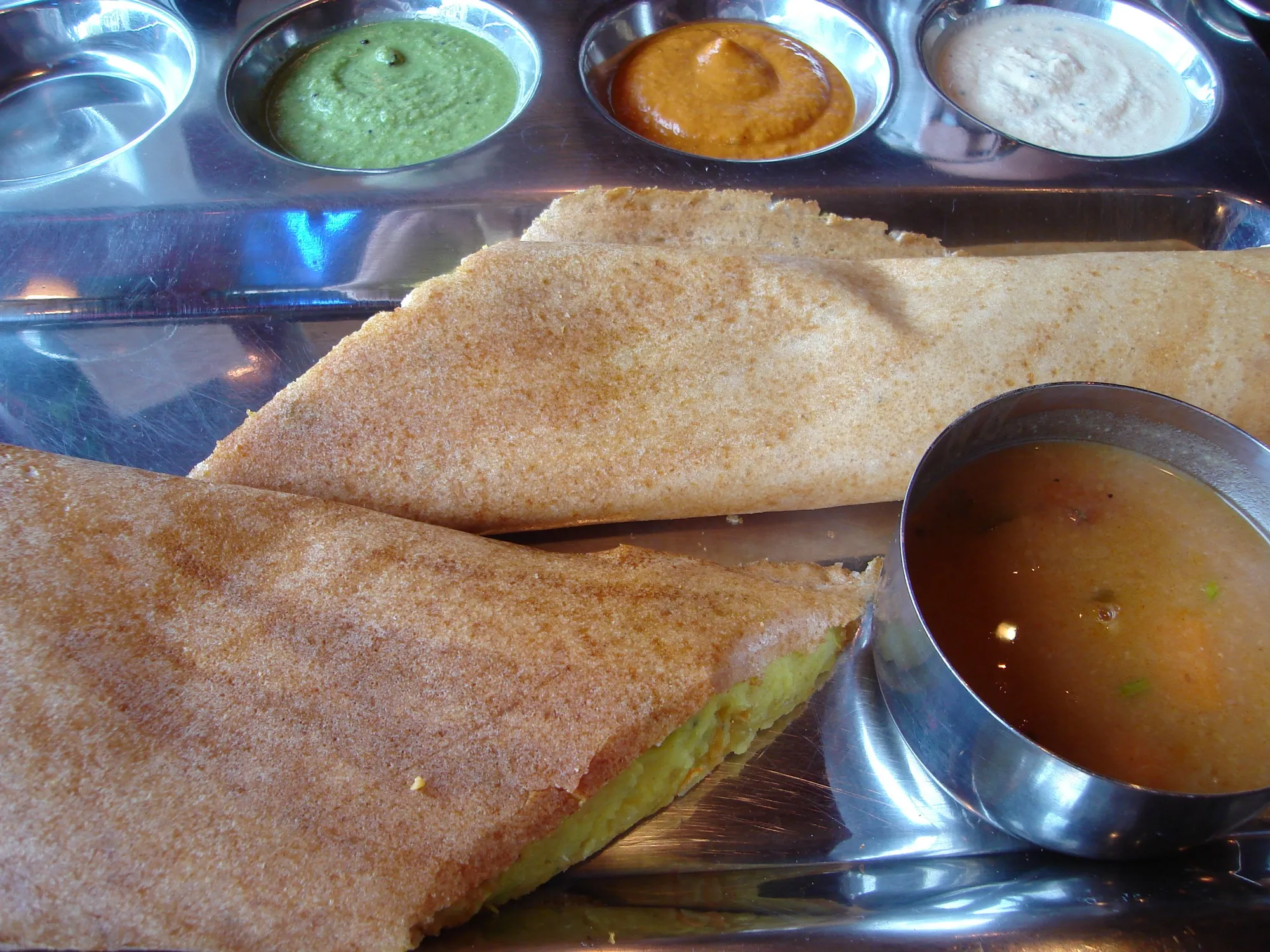
Dosa is made from rice and lentils, but ask about the hing in the sambar. Photo: Mike Linksvayer, public domain (CC0), via Wikimedia Commons
Looking for gluten-free Indian food near you? GF Scanner maps verified gluten-free restaurants, with a filter for 100% gluten-free kitchens.
Get GF Scanner →Table of contents
Open Table of contents
Quick answer: which Indian dishes are gluten free?
| Usually safe | Ask first | Avoid |
|---|---|---|
| Plain basmati rice, biryani, pulao | Dal and sambar (hing) | Naan, roti, chapati, paratha, puri |
| Tandoori chicken and fish | Pakoras (batter and shared fryer) | Samosas |
| Chana masala | Papadums (shared fryer) | Rava dosa and upma (semolina) |
| Butter chicken, tikka masala, korma | Malai kofta (may contain flour) | Gulab jamun |
| Saag paneer, palak paneer | Any dish in a thick, flour-like gravy | Bhatura |
| Plain dosa and idli | ||
| Kheer (rice pudding), kulfi |
The hidden ingredient: asafoetida (hing)
Asafoetida, called hing in India, is a pungent spice used in small amounts in dals, sambar, chutneys, and many vegetable dishes. Pure asafoetida is a plant resin and doesn’t contain gluten. But most commercial hing powder is cut with wheat flour to keep it from clumping, and sometimes wheat makes up most of the powder.
That’s why a dal, which is otherwise just lentils and spices, can contain gluten. Ask whether the kitchen uses hing, and if it does, whether it’s a gluten-free version. Gluten-free hing exists, but it isn’t the default.
What to order at an Indian restaurant
Rice dishes. Plain basmati rice, biryani, and pulao are built on rice and are usually safe.
Tandoori dishes. Tandoori chicken, fish, and paneer are marinated in yogurt and spices, then cooked in the tandoor. Note that naan is baked in the same oven, so if you’re very sensitive, ask how they keep them apart.
Most curries. Butter chicken, chicken tikka masala, korma, saag, and chana masala are usually thickened with tomatoes, onions, cream, yogurt, or ground nuts, not flour. Ask anyway, because a few restaurants thicken sauces with wheat flour.
South Indian dishes. Plain dosa and idli are made from a fermented batter of rice and lentils, so they’re naturally gluten free. Watch out for rava dosa, which is made with semolina, a form of wheat.
Desserts. Kheer (rice pudding) and kulfi are usually gluten free. Gulab jamun usually contains wheat flour.
The breads and snacks to skip
Naan, roti, chapati, paratha, puri, and bhatura are all made from wheat. This is the biggest adjustment, because bread comes with almost everything. Ask for extra rice instead, or a plain dosa at a South Indian restaurant.
Samosas have a wheat pastry shell.
Pakoras are made with chickpea flour, which is gluten free, but some cooks mix in wheat flour, and they’re almost always fried in shared oil.
Papadums are usually made from lentil flour, but they’re also often fried in the same oil as wheat-based snacks.
Want Indian tonight? Find gluten-free restaurants near you, verified by the celiac community.
📲 Get GF Scanner on the App StoreHow to order gluten-free Indian food in the US
Ask three questions. Do you use hing, and is it gluten free? Are any sauces thickened with flour? Is anything I’m ordering fried in shared oil?
Skip the bread basket and the free papadums. They arrive automatically at many restaurants, and crumbs and shared oil are the most common cross-contact risk.
South Indian restaurants are often the easiest. The menu is built around rice and lentil dishes like dosa, idli, and uttapam, so there’s less wheat in the kitchen overall.
Buffets are risky. Shared serving spoons move between naan, pakoras, and curries all day.
Eating gluten free in India
If you’re traveling to India, the region matters a lot.
- South India is easier. Food in Tamil Nadu, Kerala, and Karnataka centers on rice, dosa, idli, and sambar.
- North India is harder. Meals there revolve around wheat breads like roti, naan, and paratha.
- Carry a card in Hindi or the local language. Name wheat (gehun), semolina (sooji or rava), and asafoetida (hing) specifically.
- Packaged snacks need checking. Many Indian snacks are made from chickpea or rice flour, but some contain wheat. GF Scanner can check a barcode for you.
For other cuisines, see our guides to gluten-free Chinese food and gluten-free Thai food.
The bottom line
Indian food is one of the most celiac-friendly cuisines out there. Rice dishes, tandoori meats, most curries, and South Indian dosa and idli are usually safe. Skip the wheat breads and samosas, be careful with fried snacks, and always ask about hing. It’s the one ingredient that turns a safe-looking dal into a problem.
Sources
- Gluten-Free Indian Food: What You Can (and Can’t) Order (Flavor of India)
- What Indian Food Is Gluten-Free? Dishes and Hidden Risks (ScienceInsights)
- Which Dosa Types Are Gluten Free? (The Gluten Guide)
Craving Indian? Find a kitchen you can trust.
GF Scanner maps verified gluten-free restaurants near you and scans packaged food in seconds, at home or abroad.
📲 Download GF Scanner on the App Store