
Is Chinese food gluten free? By default, mostly no. The reason isn’t the rice or the vegetables. It’s the sauces. Regular soy sauce is brewed with wheat, and it goes into marinades, stir-fries, soups, and dipping sauces across almost the entire menu.
The good news is that Chinese food is very doable with celiac disease once you know which ingredients to watch. Rice, rice noodles, and cornstarch, three of the cuisine’s staples, are naturally gluten free. This guide covers what to order, what to skip, and how to ask, whether you’re at a takeout place at home or traveling in China.
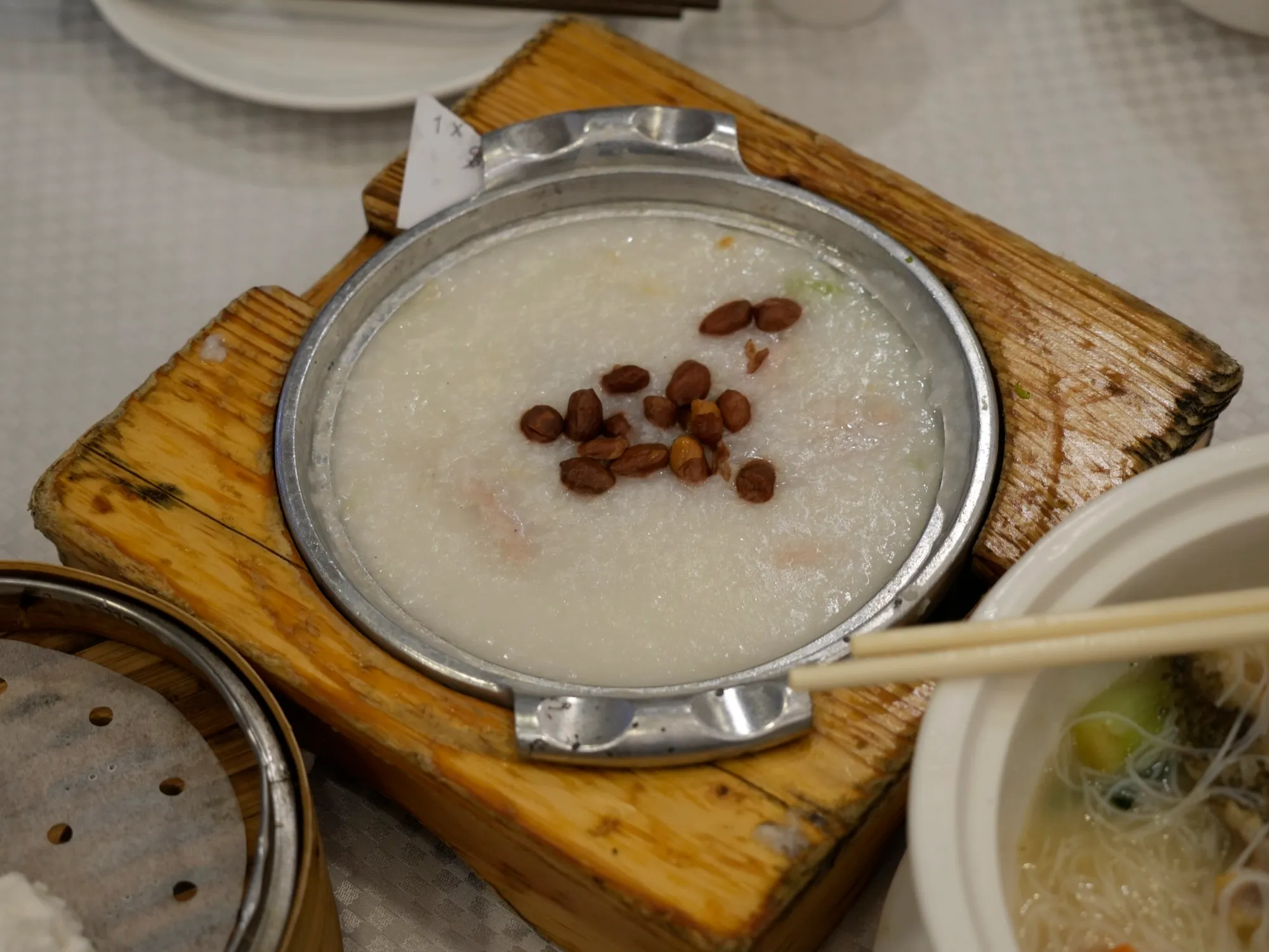
Plain congee is just rice and water, but toppings and soy sauce can change that. Photo: Peachyeung316, CC BY-SA 4.0, via Wikimedia Commons
Looking for a gluten-free Chinese restaurant near you? GF Scanner maps verified gluten-free restaurants, with a filter for 100% gluten-free kitchens.
Get GF Scanner →Table of contents
Open Table of contents
Quick answer: safe, ask first, avoid
| Usually safe | Ask first | Avoid |
|---|---|---|
| Plain steamed rice | Steamed fish or chicken (often finished with soy sauce) | Lo mein and chow mein (wheat noodles) |
| Rice noodles | Stir-fried vegetables (sauce) | Dumplings, wontons, egg rolls, spring rolls |
| Plain congee | Fried rice (soy sauce) | General Tso’s, orange, and sesame chicken |
| Fresh fruit | Egg drop soup (seasoning) | Peking duck (hoisin and wheat pancakes) |
| Plain steamed vegetables | Hot pot (broth and dipping sauces) | Hot and sour soup |
The ingredients that hide gluten
Soy sauce is the big one. Standard Chinese light and dark soy sauce is brewed with wheat. Gluten-free soy sauce exists, so ask whether the restaurant has it, but don’t assume tamari is safe either. Some brands contain wheat, so check the label.
Oyster sauce, hoisin sauce, and black bean sauce usually contain wheat or soy sauce. Gluten-free versions exist, but most restaurants use the regular ones.
Shaoxing wine, the rice wine in many sauces and marinades, is fermented with wheat.
Doubanjiang, the chili bean paste behind mapo tofu and many Sichuan dishes, often contains wheat flour.
Wheat noodles and wrappers are in lo mein, chow mein, dumplings, wontons, buns, and spring rolls. The translucent wrapper on shrimp dumplings (har gow) is made from wheat starch, which isn’t reliably gluten free in a restaurant.
Batter coats most crispy dishes, like General Tso’s, orange chicken, sweet and sour pork, and salt-and-pepper squid.
The ingredients that are safe
Rice in every form: steamed rice, congee, rice noodles (ho fun, mei fun, rice vermicelli), and rice flour.
Glutinous rice (sticky rice) is safe despite its name. “Glutinous” describes its sticky texture. It doesn’t contain gluten.
Cornstarch thickens most Chinese sauces, including the light “white sauce” on many stir-fries. Cornstarch itself is gluten free. The risk is what else goes into the sauce.
Ginger, garlic, scallions, fresh chili, sesame oil, and rice vinegar are all naturally gluten free.
What to order at a Chinese restaurant
- Steamed fish, chicken, or shrimp with ginger and scallion. Cantonese-style steamed fish is usually finished with soy sauce poured over the top, so ask for it with salt, ginger, and scallion only.
- Stir-fried vegetables with garlic. Ask for no oyster sauce or soy sauce, and for a simple garlic and cornstarch sauce instead.
- Plain congee. It’s rice cooked in water or broth. Ask whether the broth contains soy sauce, and skip the fried dough sticks (youtiao) served alongside it.
- Rice noodle dishes made without soy sauce. Many classic ho fun dishes use soy sauce, so this needs a specific request.
- Plain steamed rice with any of the above.
How to order safely in the US
Ask about gluten-free soy sauce first. If the kitchen has it, a lot more of the menu opens up. If it doesn’t, stick to steamed dishes and plain rice.
Ask about the wok. Chinese kitchens often wipe a wok between orders instead of washing it. If the cook just made lo mein, traces can end up in your dish. Asking for a clean wok is a reasonable request.
Look for a gluten-free menu. Some chains, including P.F. Chang’s, have a dedicated gluten-free menu. A written menu is a good sign the kitchen has thought about it.
Avoid anything crispy, fried, or “crunchy” unless the restaurant can confirm a gluten-free batter and a dedicated fryer.
Skip the guessing. Find gluten-free Chinese and Asian restaurants near you, verified by the celiac community.
📲 Get GF Scanner on the App StoreTraveling to China or Hong Kong with celiac disease
Eating gluten free in China is harder than eating Chinese food at home. Soy sauce is in almost everything, dedicated gluten-free restaurants are rare, and few kitchens are used to the request. A few things make it manageable.
Southern China is easier than the north. Northern Chinese food leans on wheat: hand-pulled noodles, dumplings, steamed buns, and flatbreads. Southern and Cantonese cooking, including Hong Kong, is built more around rice.
Carry a printed card in Chinese. A card that names wheat and soy sauce works better than trying to explain at the table. Two phrases are worth knowing: 我不能吃小麦 (wǒ bù néng chī xiǎomài, “I can’t eat wheat”) and 不要酱油 (bú yào jiàngyóu, “no soy sauce”).
Hot pot can work. Choose a clear bone broth instead of a spicy or soy-based one, cook plain meat and vegetables, and skip the dipping sauces, or ask for sesame paste and fresh garlic instead.
Plan a few safe meals ahead. Hotel breakfasts with eggs, fruit, and plain congee are a good daily anchor. For packaged snacks with Chinese-only labels, GF Scanner can check the barcode for you.
If your trip takes you elsewhere in Asia, see our guides to Tokyo, Seoul, and Bangkok. For a full list of hidden gluten sources, see our hidden gluten guide.
The bottom line
Chinese food isn’t gluten free by default, but it’s one of the more workable cuisines once you know the rules. Rice is the base, cornstarch is the thickener, and the problems come from a handful of sauces and wheat-based noodles and wrappers. Ask about the soy sauce and the wok, order steamed dishes and rice noodles, and skip anything fried or wrapped.
Sources
- Gluten-Free Chinese Food: It’s Actually Pretty Easy! (The Woks of Life)
- Is Soy Sauce Gluten-Free? (Celiac.com)
Craving Chinese food? Find a kitchen you can trust.
GF Scanner maps verified gluten-free restaurants near you and scans packaged food in seconds, at home or abroad.
📲 Download GF Scanner on the App Store